Lose Belly fat For Life

Welcome to my blog where you can learn how to lose that stubborn belly fat and get your six pack Abs on show.

An Educational Resource

Learn what foods will help you lose belly fat and foods that won't.

Exercise Right!

Learn what exercises will help you get those stubborn abs defined, and get the body you have always wanted.

Eat Right!

Learn what foods will help you get the healthy body you have always wanted.

Get Started Today!

Claim your FREE e-book & follow these simple tips and live the healthier lifestyle you deserve.

5 Tips
Showing posts with label whole eggs. Show all posts

Tuesday, 10 November 2015

Are Whole Eggs or Egg Whites Better for You?

by Mike Geary, Certified Nutrition Specialist, Certified Personal Trainer
Author of best-sellers: The Fat Burning Kitchen & The Top 101 Foods that FIGHT Aging
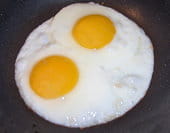

whole eggs are a perfect foodI was on a weekend trip with some friends recently and one of my friends was cooking breakfast for the whole group. I went over to see what he was cooking and saw he was getting ready to make a big batch of eggs.
Well, to my shock and horror, I noticed that he was cracking the eggs open and screening the egg whites into a bowl and throwing out the egg yolks. I asked him why the heck he was throwing out the egg yolks, and he replied something like this...
"because I thought the egg yolks were terrible for you...that's where all the nasty fat and cholesterol is".
And I replied something along the lines of... "you mean that's where all of the nutrition is!"
This is a perfect example of how confused most people are about nutrition. In a world full of misinformation about nutrition, somehow most people now mistakenly think that the egg yolk is the worst part of the egg, when in fact, the YOLK IS THE HEALTHIEST PART OF THE EGG!  It's a shame at how many restaurants you can walk into these days and see that the "healthy" breakfast menu always has egg white items instead of whole eggs.  Are we really still in the "fat-phobic" 80's? 
By throwing out the yolk and only eating egg whites, you're essentially throwing out the most nutrient dense, antioxidant-rich, vitamin and mineral loaded portion of the egg. The yolks contain so many B-vitamins, trace minerals, vitamin A, folate, choline, lutein, and other powerful nutrients... it's not even worth trying to list them all.

In fact, the egg whites are almost devoid of nutrition compared to the yolks.
Even the protein in egg whites isn't as powerful without the yolks to balance out the amino acid profile and make the protein more bio-available. Not to even mention that the egg yolks from free range chickens are loaded with healthy omega-3 fatty acids.
Yolks contain more than 90% of the calcium, iron, phosphorus, zinc, thiamin, B6, folate, and B12, and panthothenic acid of the egg. In addition, the yolks contain ALL of the fat soluble vitamins A, D, E, and K in the egg, as well as ALL of the essential fatty acids (EFAs).
And now the common objection I get all the time when I say that the yolks are the most nutritious part of the egg...
"But I heard that whole eggs will skyrocket my cholesterol through the roof"
No, this is FALSE!
First of all, when you eat a food that contains a high amount of dietary cholesterol such as eggs, your body down-regulates it's internal production of cholesterol to balance things out.
On the other hand, if you don't eat enough cholesterol, your body simply produces more since cholesterol has dozens of important vital functions in the body.
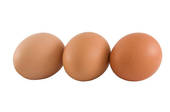
healthy whole eggsAnd here's where it gets even more interesting...
There have been plenty of studies lately that indicate that eating whole eggs actually raises your good HDL cholesterol to a higher degree than LDL cholesterol, thereby improving your overall cholesterol ratio and blood chemistry.
And 3rd... high cholesterol is NOT a disease!  Heart disease is a disease...but high cholesterol is NOT.  Cholesterol is actually a VERY important substance in your body and has vitally important functions... it is DEAD WRONG to try to "lower your cholesterol" just because of pharmaceutical companies propaganda that everyone on the planet should be on statin drugs.
If you're interested in this topic of cholesterol specifically, I have another article listed at the bottom of this page about why trying to attack cholesterol is a mistake, and what the REAL deadly risk factors actually are.
In addition, the yolks contain the antioxidant lutein as well as other antioxidants which can help protect you from inflammation within your body (the REAL culprit in heart disease, not dietary cholesterol!), giving yet another reason why the yolks are actually GOOD for you, and not detrimental.
To help bring even more proof that whole eggs are better for you than egg whites, I recently read a University of Connecticut study that showed that a group of men in the study that ate 3 eggs per day for 12 weeks while on a reduced carb, higher fat diet increased their HDL good cholesterol by 20%, while their LDL bad cholesterol stayed the same during the study.  However, the group that ate egg substitutes (egg whites) saw no change in either and did not see the improvement in good cholesterol (remember that higher HDL levels are associated with lower risk of heart disease) that the whole egg eaters did.
So I hope we've established that whole eggs are not some evil food that will wreck your body... instead whole eggs are FAR superior to egg whites.
But what about the extra calories in the yolks?
This is actually a non-issue and here's why... even though egg yolks contain more calories than just eating the egg whites, the yolks have such a high micro-nutrient density in those calories, that it increases your overall nutrient density per calorie you consume.  Essentially, what this does is help to regulate your appetite for the remainder of the day, so you end up eating less calories overall.  In addition, the healthy fats in the egg yolks help to maintain a good level of fat-burning hormones in your body.
Overall, this means that the extra fats (healthy fats) and calories from the yolk are so nutrient-dense that they actually HELP you to burn off body fat!
Also, your normal supermarket eggs coming from mass factory farming just don't compare nutritionally with organic free range eggs from healthy chickens that are allowed to roam freely and eat a more natural diet.  Your typical cheap grocery store eggs will have lower nutrient levels and a higher omega-6 level and lower omega-3 level.  On the other hand, the cage-free organic eggs from healthier chickens allowed to eat more natural feed and roam freely will have much higher vitamin and mineral levels and a more balanced healthier omega-3 to omega-6 fatty acid ratio.
I recently compared eggs I bought at the grocery store with a batch of eggs I got at a farm stand where the chickens were free roaming and healthy.
Most people don't realize that there's a major difference because they've never bought real eggs from healthy chickens... The eggs from the grocery store had pale yellow yolks and thin weak shells. On the other hand, the healthier free range eggs from the local farm had strong thick shells and deep orange colored yolks indicating much higher nutrition levels and carotenoids... and just a healthier egg in general.
This is due to the fact that a free-roaming hen allowed to roam on plenty of land will eat a variety of greens, insects, worms, etc transferring MUCH higher levels of nutrients to the eggs compared to an unhealthy hen that is trapped inside a dark factory farm hen house in horrible conditions and fed nothing but piles of corn and soy.  It's a DRASTIC difference in the nutrition that you get from the egg.
So next time a health or fitness professional tells you that egg whites are superior (because of their "fat-phobic" mentality towards dietary fats), you can quietly ignore their advice knowing that you now understand the REAL deal about egg yolks.
And can we all please STOP with this sillyness about eating an omelete with 4-5 egg whites and only 1 egg yolk... If you want real taste and real health benefits, we'd all be better off eating ALL of our eggs with the delicious nutrient-dense yolks.
After all, do you REALLY think that our ancestors thousands of years ago threw out the yolks and only ate the egg whites?  NOT A CHANCE!  They intuitively knew that all of the nutrition was found in the yolks.  But our modern society has been brainwashed with misinformation about fats and cholesterol.
Another interesting study about eggs...
I read a study recently that compared groups of people that ate egg breakfasts vs groups of people that ate cereal or bagel-based breakfasts.  The results of the study showed that the egg eaters lost or maintained a healthier bodyweight, while the cereal/bagel eaters gained weight. 
It was hypothesized that the egg eaters actually ate less calories during the remainder of the day because their appetite was more satisfied compared to the cereal/bagel eaters who would have been more prone to wild blood sugar swings and food cravings.
Oh, one last thing I almost forgot... I personally eat 4 whole eggs almost every day with breakfast, and I maintain single-digit bodyfat most of the year. 
Enjoy your eggs and get a leaner body!

Health Alert:

 These 23 "health foods" CAUSE weight gain
(avoid them!)


Monday, 10 August 2015

3 Counterfeit Foods Marketed as "Healthier" - these are Deceptive

by Mike Geary, Certified Nutrition Specialist, Certified Personal Trainer

author of best-selling program:  The Truth about Six Pack Abs

I was at the grocery store yesterday and had to shake my head at all of the deceptive labels with everything claiming all sorts of things that are supposedly "healthy", but aren't really. 

One of the things that really disturbed me was that I saw several examples of healthy foods in their natural state, but I saw counterfeit versions of these foods claiming that they were healthier than the original...
Yet in reality, all of these "counterfeit" versions were actually MUCH worse for you than the original, and more highly processed... and they still have the balls to claim that their overly processed "junkified" versions are better.
This is food marketing deception at it's worst!
Example #1:  Product claiming "Better than peanut butter" by being a low-fat peanut butter
This product is ridiculous!  I can't believe anyone would ever believe that this junk is better for them than natural peanut butter.
What I'm talking about here are the types of peanut butter that claim to be "lower-fat peanut butter"...  But remember that "low-fat" many times just means more added sugars and carbs to replace the fats they took out.  Not good!
First of all, if you buy a good simple peanut butter (organic is best), it is usually nothing but 2 ingredients... peanuts and salt. And they don't add much salt so it's not high in sodium. 
Note: Remember to always avoid peanut butters that contain harmful hydrogenated oils.  Peanut butter that contains palm oil is a better alternative than added hydrogenated oils... but natural peanut butter with just peanuts and salt is best.
Back to the counterfeit peanut butter... This counterfeit peanut butter which claimed it was "better than peanut butter" (trying to seem healthier than peanut butter based on it's label claims) had a list of junk in it you wouldn't believe. First of all, they strip most of the healthy fats out of the peanuts so that it is a "low fat" product. Ok, now you've just taken away one of the healthiest parts of the product...the appetite satisfying healthy fats that you need to control cravings and manage more stable blood sugar levels.
To make things worse, the healthy fats were replaced with TWO different types of sugary syrups as well as additional dehydrated cane juice (aka SUGAR), in addition to added refined starches.
This product has taken something as simple and natural as peanut butter, and turned it into what should really be called some sort of processed candy. Yet, they claim that it's healthier than peanut butter because it's "lower fat".  And somehow they get away with deceiving people like this. Don't be their fool! 
This overly processed peanut butter may be lower in fat (by removing the healthy fats), but it's also higher in sugar and total carbohydrates, bringing the calorie total pretty close to regular peanut butter.
Example #2: Product claiming to be "better than eggs".
I won't get as detailed on this one because I recently talked about this entire topic in another newsletter.
But basically, this product was just egg whites with a bunch of added chemical colorings, flavorings, and other nonsense, including fake added vitamins.
Again, this product has essentially ruined a good thing by removing the healthiest part... the YOLKS!  And yes, the yolks ARE the healthiest part of the egg. Anybody that tells you different doesn't understand much about REAL nutrition.  The important thing to look for in quality whole eggs are cage-free and organic, and also the diet that the hens ate.  Most commercial egg farms are a disaster for the health of the hens, as they are crowded inside hen houses and never see the light of day, and are fed unhealthy amounts of grains.
Your best bet is to find a local farmer that you know allows the hens daily time outdoors to roam freely on land and eat a variety of greens, bugs, etc.  I understand that not everybody can find a local farmer that does this type of thing... so what you want to look for at the grocery store is organic, free-range eggs, and also brands that claim higher amounts of DHA or omega-3's. 
A slight improvement over standard eggs is if the hens had flax seed or algae feed included in their diet to increase the omega-3 content of the eggs.  These eggs will have a better ratio of omega-3 to omega-6 fats.
If you missed my previous article about whole eggs vs egg whites, you can view it here...
Click here, Are Whole Eggs or Egg Whites Healthier?
Example #3:  A product claiming to be "better than butter".
This was essentially crappy margarine loaded with highly processed and deadly trans fats, yet it had the nerve to claim it was "better than butter".
Who are they fooling!
Even low quality butter is healthier than ANY margarine. One problem with butter can be pesticides and hormones from improperly raised cows.
For this reason, you always want to choose organic butter, and if you can find "grass-fed" organic butter, then I would even say it can be healthy for you.  In fact, a little known fact is that adding a little butter to your steamed vegetables helps your body to absorb more of the vitamins and minerals in the veggies.  It's true...having veggies with a fat source aids your assimilation of vitamins and minerals.  If you missed the article the other day about why      Click here:- healthy grass-fed butter can even help fat loss, read that here .
Another factor in favor of butter:
Due to the content of stable saturated fats in butter, this makes butter one of the healthiest oils or fats to cook with. Oils high in polyunsaturated fats are the worst to cook with due to their highly unstable nature, which contributes to excess free radical production.  For more info about this topic, here's an article I did about healthy vs unhealthy cooking oils
What about the saturated fats in butter?
No, the saturated fat in butter is NOT bad for you. If you've been reading my newsletters for some time, you know that we've already beaten that topic to death. If you're new to this newsletter, you can go back to this page to see why saturated fats are a perfectly natural part of the human diet and always have been: Click here:-Evidence that saturated fat is NOT bad for you
Feel free to share this article with your friends and family and help to protect their health:

Thursday, 30 July 2015

My Top 55 Lean-Body Foods to Build Lean Muscle and Lose Body Fat

by Mike Geary - Certified Nutrition Specialist, Certified Personal Trainerhealthy steak 

Author of best-selling program:  The Truth about Six Pack Abs

In most of my Lean-Body Secrets Newsletters, I like to provide a healthy snack or meal recipe that not only is delicious and healthy, but also helps to get you closer to that hard-body appearance that everyone is looking for, while also more importantly, improving your health for life. In this article, I'd like to give you healthy food ideas in a different way. This time, I figured I'd just give you some ideas of what I stock my fridge and cabinets with.
Remember, if you don't have junk around the house, you're less likely to eat junk!  If all you have is healthy nutritious foods around the house, you're forced to make smart choices. Basically, it all starts with making smart choices and avoiding temptations when you make your grocery store trip. Now these are just some of my personal preferences, but perhaps they will give you some good ideas that you'll enjoy.
Some of these will be obvious healthy choices, such as fruits and veggies... however, others on this page I think will surprise you!
Alright, so let's start with the fridge. Each week, I try to make sure I'm loaded up with lots of varieties of fresh vegetables. During the growing season, I only get local produce, but obviously in winter, I have to resort to the produce at the grocery store. Most of the time, I make sure I have plenty of vegetables like onions, zucchini,  spinach, fresh mushrooms, red peppers, broccoli, etc. to use in my morning eggs.  I also like to chop up some lean chicken or turkey sausage (make sure to look for nitrate & nitrite free) or grass-fed bison sausage into the eggs, along with some swiss, jack, or goat cheeses (preferably raw grass-fed cheeses when I can find them). 
By the way I'm talking about whole eggs, NOT egg whites.  Always remember that the yolk is the most nutritious and nutrient dense part of the egg, so only eating egg whites is like throwing away the best part... and no, it's NOT bad for you because of the cholesterol... whole eggs actually raise your GOOD cholesterol.  Try to get free range organic eggs for the best quality. Here's an entire article I did on the topic of whole eggs vs egg whites.
Coconut milk is another staple in my fridge. I like to use it to mix in with smoothies, oatmeal, or yogurt for a rich, creamy taste. Not only does coconut milk add a rich, creamy taste to lots of dishes, but it's also full of healthy saturated fats. Yes, you heard me right... I said healthy saturated fats!  ...Healthy saturated fats such as medium chain triglycerides (MCTs), specifically an MCT called lauric acid, which is vitally important for your immune system.
If the idea of healthy saturated fats is foreign to you, check out my article about why saturated fat is not as bad as you think.
Back to the fridge, some other staples:
  • Walnuts, pecans, almonds - delicious and great sources of healthy fats.  Try to get raw nuts if possible as the roasting process can oxidize some of the polyunsaturated fats in some types of nuts making those damaged fats slightly more inflammatory.  Overall, nuts are still healthy even if they are roasted, but raw nuts are optimal. 
  • Cottage cheese, ricotta cheese, and yogurt (grass-fed and organic if possible) - I like to mix cottage or ricotta cheese and yogurt together with chopped nuts and berries for a great mid-morning or mid-afternoon meal.
  • Chia seeds and/or hemp seeds - I add these highly nutritious seeds to yogurt, smoothies, or salads for a great nutty taste and loads of omega-3 fatty acids and vitamins and minerals. Don't use pre-ground versions of these seeds as the omega-3 polyunsaturated fats are highly unstable and prone to oxidation, creating high levels of free radicals if you use pre-ground seeds.  No grinding is necessary to properly digest these seeds. 
  • Whole eggs - one of natures richest sources of nutrients (and remember, they increase your GOOD cholesterol so stop fearing them).
  • Salsa - I try to get creative and try some of the exotic varieties of salsas.
  • Avocados - love them...plus a great source of healthy fats, fiber, and other nutrients. Try adding them to wraps, salads, or sandwiches.
  • Butter - don't believe the naysayers; butter adds great flavor to anything and CAN be part of a healthy diet... just keep the quantity small because it is calorie dense... and NEVER use margarine, unless you want to assure yourself a heart attack.  Most important -- choose organic butter only, since pesticides and other harmful chemicals accumulate in the fat of the milk which is used for butter, so choosing organic helps avoid this problem.  Also, choose grass-fed (pastured) butter if you can find it as it will contain higher levels of healthful omega-3 fats and the fat-burning conjugated linoleic acid (CLA). 
  • Nut butters - Plain old peanut butter has gotten a little old for me, so I get creative and mix together almond butter with pecan butter, or even cashew butter with macadamia butter...delicious and unbeatable nutrition!  Using a variety of nut butters gives you a broader range of vitamins and minerals and other micronutrients, and gives you variety instead of boring old peanut butter all the time.
  • Leaf lettuce and spinach along with shredded carrots - for salads with dinner.
  • Home-made salad dressing - using balsamic vinegar, spices, extra virgin olive oil, and Udo's Choice oil blend. This is much better than store bought salad dressing which mostly use highly refined canola or soybean oil (canola and soybean oil are both very inflammatory in the body).  Here's an article showing why to NEVER use store-bought salad dressings.
  • Sprouted grain bread for occasional use -- My personal belief from years of nutrition research is that we're not really meant to consume the massive quantities of grains (not even whole grains) that we do in this day and age... a small amount may be okay, but our digestive systems are still primarily adapted to a hunter/gatherer type of diet with only a very small amount of grains, therefore I try to only have breads and other grain-based foods on cheat days.
  • Rice bran - If we're going to have some grain-based food, we might as well have the most nutrient dense part, and rice bran is one of those parts, since it includes the germ of brown rice too. Rice bran is loaded with vitamins and minerals but without the large amount of starch calories that rice has... and it actually adds a nice little nutty, crunchy taste to yogurt or smoothies, or can be added when baking to add nutrients and fiber to the recipe.
Some of the staples in the freezer:
  • Frozen berries - during the local growing season, I only get fresh berries, but during the other 10 months of the year, I always keep a supply of frozen blueberries, raspberries, blackberries, strawberries, cherries, etc. to add to high fiber cereal, oatmeal, cottage cheese, yogurt, or smoothies. I also get frozen goji berries sometimes for a little "exotic" variety. 
  • Frozen fish - I like to try a couple different kinds of fish each week. There are so many varieties out there, you never have to get bored. Just make sure to ALWAYS choose wild fish instead of farmed versions, as the omega-3 to omega-6 balance is MUCH healthier in wild fish. 
  • Frozen chicken breasts - very convenient for a quick addition to wraps or chicken sandwiches for quick meals.
  • Grass-fed steaks, burgers, and ground beef:  Grass-fed meats have been shown to have as high as, or even higher levels of omega-3 fatty acids than salmon (without the mercury).  Also, grass-fed meats have much higher levels of fat-burning and muscle-building conjugated linoleic acid (CLA) compared to typical grain-fed beef that you'll find at your grocery store.  I recently found an excellent on-line store where I buy all of my grass-fed meats now (they even deliver right to your door in a sealed cooler) - www.healthygrassfed.2ya.com
  • Frozen buffalo, ostrich, venison, and other "exotic" lean meats - Yeah, I know...I'm weird, but I can tell you that these are some of the healthiest meats around, and if you're serious about a lean healthy body, these types of meats are much better for you than the mass produced, hormone-pumped beef, chicken, and pork that's sold at most grocery stores.
  • Frozen veggies - again, when the growing season is over and I can no longer get local fresh produce, frozen veggies are the best option, since they often have higher nutrient contents compared to the fresh produce that has been shipped thousands of miles, sitting around for weeks before making it to your dinner table.
Alright, now the staples in my cabinets:
  • Various antioxidant-rich teas - green, oolong, white, rooibos (red tea) are some of the healthiest.  One of my newest favorite teas is yerba mate, which is a south american tea that is loaded with antioxidants and other nutrients. I've found some delicious yerba mate mixes such as chocolate yerba mate, mint mate, raspberry mate, etc.
  • Oat bran and steel cut oats - higher fiber than those little packs of instant oats, which are typically loaded with sugar.  If I'm trying to reduce body fat and get extra lean, I make most of my breakfasts based on eggs and veggies and bison sausage, but if I'm on a muscle building phase, I increase carbohydrate intake and use more oat bran and oatmeal.
  • The only healthy oils I have in my cabinets are virgin coconut oil and extra virgin olive oil. Macadamia oil may also be a reasonable choice as long as it's not "refined".  But other than that, all "vegetable oils" (which is usually soy and corn oil) are total junk and very inflammatory. Never use soy or corn oils!  Also, always avoid canola oil, as there is nothing healthy about canola oil, despite the deceptive marketing claims by the canola oil industry.
  • Cans of coconut milk (loaded with healthy saturated MCT fats) - to be transferred to a container in the fridge after opening.
  • Brown rice and other higher fiber rice - NEVER white rice
  • Tomato sauces - delicious, and as I'm sure you've heard a million times, they are a great source of lycopene. Just watch out for the brands that are loaded with nasty high fructose corn syrup.  You also want to make sure that the tomato sauce is made with olive oil instead of unhealthy soybean oil or canola oils. Also get tomato sauces in glass jars instead of cans, as canned tomatoes are notoriously high in the dangerous chemical, bisphenol-A (BPA) due to the acidic leaching of BPA from the can lining.
  • Stevia - a natural non-caloric sweetener, which is an excellent alternative to the nasty chemical-laden artificial sweeteners like aspartame, saccharine, and sucralose.
  • Raw honey - better than processed honey... higher quantities of beneficial nutrients and enzymes. Honey has even been proven in studies to improve glucose metabolism (your efficiency in processing carbohydrates).  I use a small teaspoon every morning in my teas.  Yes, I know that even honey is pure sugar, but at least it has some nutritional benefits... and let's be real, a teaspoon of healthier raw honey is only 5 grams of carbs... certainly nothing to worry about, and a better choice than refined sugar.
  • Organic REAL maple syrup - none of that high fructose corn syrup Aunt Jemima crap...only real maple syrup can be considered real food. The only time I really use this (because of the high sugar load) is added to my post-workout smoothies to sweeten things up and also elicit an insulin surge to push nutrients into your muscles to aid muscle recovery.
  • Organic unsweetened cocoa powder - I like to mix this into my smoothies for an extra jolt of antioxidants or make my own low-sugar hot cocoa by mixing cocoa powder into hot milk with stevia and a couple melted dark chocolate chunks (delicious!).
  • Cans of black or kidney beans - I like to add a couple scoops to my Mexican dishes for the fiber and high nutrition content. Also, beans are surprisingly one of the best sources of youth enhancing antioxidants!  Did you know that black beans and kidney beans have more antioxidants than blueberries...it's true!
  • Dark chocolate (as dark as possible - ideally more than 70-75% cocoa content) - This is one of my treats that satisfies my sweet tooth, plus provides loads of antioxidants at the same time. It's still calorie dense, so I keep it to just 1-2 small squares after a meal... but that is enough to do the trick, so I don't feel like I need to go out and get cake and ice cream to satisfy my dessert urges.
Lastly, another thing that's hard to go wrong with is a good variety of fresh fruits and berries. The staples such as bananas, apples, oranges, pears, peaches are good, but I like to also be a little more adventurous and include things like yellow (aka - mexican or champagne) mangoes, pomegranates, kumquats, papaya, star fruit, pineapples, and others. Also, strawberries, blueberries, raspberries, blackberries, black raspberries (the highest fiber berry) and cherries are some of the most nutrient and antioxidant-dense fruits you can eat.
Well, I hope you enjoyed this special look into my favorite lean body meals and how I stock my cabinets and fridge. Your tastes are probably quite different than mine, but hopefully this gave you some good ideas you can use next time you're at the grocery store looking to stock up a healthy and delicious pile of groceries.
If you liked this article feel free to share with your friends and family.

   5 Foods that FIGHT Abdominal Fat


Monday, 9 February 2015

Are Whole Eggs or Egg Whites Better for You?

by Mike Geary, Certified Nutrition Specialist, Certified Personal Trainer
Author of best-sellers: The Fat Burning Kitchen & The Top 101 Foods that FIGHT Aging


whole eggs are a perfect foodI was on a weekend trip with some friends recently and one of my friends was cooking breakfast for the whole group. I went over to see what he was cooking and saw he was getting ready to make a big batch of eggs.
Well, to my shock and horror, I noticed that he was cracking the eggs open and screening the egg whites into a bowl and throwing out the egg yolks. I asked him why the heck he was throwing out the egg yolks, and he replied something like this...
"because I thought the egg yolks were terrible for you...that's where all the nasty fat and cholesterol is".
And I replied something along the lines of... "you mean that's where all of the nutrition is!"
This is a perfect example of how confused most people are about nutrition. In a world full of misinformation about nutrition, somehow most people now mistakenly think that the egg yolk is the worst part of the egg, when in fact, the YOLK IS THE HEALTHIEST PART OF THE EGG!  It's a shame at how many restaurants you can walk into these days and see that the "healthy" breakfast menu always has egg white items instead of whole eggs.  Are we really still in the "fat-phobic" 80's? 
By throwing out the yolk and only eating egg whites, you're essentially throwing out the most nutrient dense, antioxidant-rich, vitamin and mineral loaded portion of the egg. The yolks contain so many B-vitamins, trace minerals, vitamin A, folate, choline, lutein, and other powerful nutrients... it's not even worth trying to list them all.

In fact, the egg whites are almost devoid of nutrition compared to the yolks.
Even the protein in egg whites isn't as powerful without the yolks to balance out the amino acid profile and make the protein more bio-available. Not to even mention that the egg yolks from free range chickens are loaded with healthy omega-3 fatty acids.
Yolks contain more than 90% of the calcium, iron, phosphorus, zinc, thiamin, B6, folate, and B12, and panthothenic acid of the egg. In addition, the yolks contain ALL of the fat soluble vitamins A, D, E, and K in the egg, as well as ALL of the essential fatty acids (EFAs).
And now the common objection I get all the time when I say that the yolks are the most nutritious part of the egg...
"But I heard that whole eggs will skyrocket my cholesterol through the roof"
No, this is FALSE!
First of all, when you eat a food that contains a high amount of dietary cholesterol such as eggs, your body down-regulates it's internal production of cholesterol to balance things out.
On the other hand, if you don't eat enough cholesterol, your body simply produces more since cholesterol has dozens of important vital functions in the body.
healthy whole eggsAnd here's where it gets even more interesting...
There have been plenty of studies lately that indicate that eating whole eggs actually raises your good HDL cholesterol to a higher degree than LDL cholesterol, thereby improving your overall cholesterol ratio and blood chemistry.
And 3rd... high cholesterol is NOT a disease!  Heart disease is a disease...but high cholesterol is NOT.  Cholesterol is actually a VERY important substance in your body and has vitally important functions... it is DEAD WRONG to try to "lower your cholesterol" just because of pharmaceutical companies propaganda that everyone on the planet should be on statin drugs.
If you're interested in this topic of cholesterol specifically, I have another article listed at the bottom of this page about why trying to attack cholesterol is a mistake, and what the REAL deadly risk factors actually are.
In addition, the yolks contain the antioxidant lutein as well as other antioxidants which can help protect you from inflammation within your body (the REAL culprit in heart disease, not dietary cholesterol!), giving yet another reason why the yolks are actually GOOD for you, and not detrimental.
To help bring even more proof that whole eggs are better for you than egg whites, I recently read a University of Connecticut study that showed that a group of men in the study that ate 3 eggs per day for 12 weeks while on a reduced carb, higher fat diet increased their HDL good cholesterol by 20%, while their LDL bad cholesterol stayed the same during the study.  However, the group that ate egg substitutes (egg whites) saw no change in either and did not see the improvement in good cholesterol (remember that higher HDL levels are associated with lower risk of heart disease) that the whole egg eaters did.
So I hope we've established that whole eggs are not some evil food that will wreck your body... instead whole eggs are FAR superior to egg whites.
But what about the extra calories in the yolks?
This is actually a non-issue and here's why... even though egg yolks contain more calories than just eating the egg whites, the yolks have such a high micro-nutrient density in those calories, that it increases your overall nutrient density per calorie you consume.  Essentially, what this does is help to regulate your appetite for the remainder of the day, so you end up eating less calories overall.  In addition, the healthy fats in the egg yolks help to maintain a good level of fat-burning hormones in your body.
Overall, this means that the extra fats (healthy fats) and calories from the yolk are so nutrient-dense that they actually HELP you to burn off body fat!
Also, your normal supermarket eggs coming from mass factory farming just don't compare nutritionally with organic free range eggs from healthy chickens that are allowed to roam freely and eat a more natural diet.  Your typical cheap grocery store eggs will have lower nutrient levels and a higher omega-6 level and lower omega-3 level.  On the other hand, the cage-free organic eggs from healthier chickens allowed to eat more natural feed and roam freely will have much higher vitamin and mineral levels and a more balanced healthier omega-3 to omega-6 fatty acid ratio.
I recently compared eggs I bought at the grocery store with a batch of eggs I got at a farm stand where the chickens were free roaming and healthy.
Most people don't realize that there's a major difference because they've never bought real eggs from healthy chickens... The eggs from the grocery store had pale yellow yolks and thin weak shells. On the other hand, the healthier free range eggs from the local farm had strong thick shells and deep orange colored yolks indicating much higher nutrition levels and carotenoids... and just a healthier egg in general.
This is due to the fact that a free-roaming hen allowed to roam on plenty of land will eat a variety of greens, insects, worms, etc transferring MUCH higher levels of nutrients to the eggs compared to an unhealthy hen that is trapped inside a dark factory farm hen house in horrible conditions and fed nothing but piles of corn and soy.  It's a DRASTIC difference in the nutrition that you get from the egg.
So next time a health or fitness professional tells you that egg whites are superior (because of their "fat-phobic" mentality towards dietary fats), you can quietly ignore their advice knowing that you now understand the REAL deal about egg yolks.
And can we all please STOP with this sillyness about eating an omelete with 4-5 egg whites and only 1 egg yolk... If you want real taste and real health benefits, we'd all be better off eating ALL of our eggs with the delicious nutrient-dense yolks.
After all, do you REALLY think that our ancestors thousands of years ago threw out the yolks and only ate the egg whites?  NOT A CHANCE!  They intuitively knew that all of the nutrition was found in the yolks.  But our modern society has been brainwashed with misinformation about fats and cholesterol.
Another interesting study about eggs...
I read a study recently that compared groups of people that ate egg breakfasts vs groups of people that ate cereal or bagel-based breakfasts.  The results of the study showed that the egg eaters lost or maintained a healthier bodyweight, while the cereal/bagel eaters gained weight. 
It was hypothesized that the egg eaters actually ate less calories during the remainder of the day because their appetite was more satisfied compared to the cereal/bagel eaters who would have been more prone to wild blood sugar swings and food cravings.
Oh, one last thing I almost forgot... I personally eat 4 whole eggs almost every day with breakfast, and I maintain single-digit bodyfat most of the year. 
Enjoy your eggs and get a leaner body!

Health Alert:

 These 23 "health foods" CAUSE weight gain
(avoid them!)