Lose Belly fat For Life

Welcome to my blog where you can learn how to lose that stubborn belly fat and get your six pack Abs on show.

An Educational Resource

Learn what foods will help you lose belly fat and foods that won't.

Exercise Right!

Learn what exercises will help you get those stubborn abs defined, and get the body you have always wanted.

Eat Right!

Learn what foods will help you get the healthy body you have always wanted.

Get Started Today!

Claim your FREE e-book & follow these simple tips and live the healthier lifestyle you deserve.

5 Tips
Showing posts with label carbohydrate. Show all posts

Tuesday, 19 January 2016

Sculpt a Better Body with Proper Post-Workout Nutrition

Ideas for healthy post-workout shakes to help build muscle and enhance fat loss
Image result for wheat and dairy
by Mike Geary, Certified Nutrition Specialist, Certified Personal Trainer
Author of best-selling program:  The Truth about Six-Pack Abs


As you’ve probably heard before, your post-workout meal may very well be your most important meal of the day.
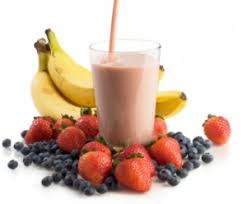
The reason is that when you’re finished with an intense workout, you’re entering a catabolic state where your muscle glycogen is depleted and increased cortisol levels are beginning to excessively break down muscle tissue. These conditions are not good and the only way to reverse this catabolic state (and promote an anabolic state) is to consume a quickly digestible post-workout meal (can be a shake or smoothie) as soon as you can after training.

The goal is to choose a meal with easily digestible quick carbs to replenish muscle glycogen as well as quickly digestible protein to provide the amino acids needed to jump start muscular repair.  The surge of carbohydrates and amino acids from this quickly digested meal promotes an insulin spike from the pancreas, which shuttles nutrients into the muscle cells.

The post-workout meal should generally contain between 300-500 calories to get the best response. For example, a 120-lb female may only need a 300-calorie meal, whereas a 200-lb male may need a 500-calorie post-workout meal. Your post-workout meal should also contain anywhere from a 2:1 ratio of carbs:protein to a 4:1 ratio of carbs:protein. While most of your other daily meals should contain a source of healthy fats, keep the fat content of your post-workout meal to a bare minimum, since fat slows the absorption of the meal, which is the opposite of what you want after a workout.

When choosing what to make for your post-workout meal, the first thing to realize is that you DON’T need any of these expensive post-workout supplement formulations that all of the fancy ads you see everywhere will tell you that you absolutely NEED!  I tend to prefer to make my own post-workout shakes from natural ingredients instead of using a commercial mixture, since many of them are low quality.


However, one that I've found that I particularly like (and from a brand that I trust) is at this page:  http://losebellyfat.getprograde.com/workout -- they have just the right ratio of carbs to protein and use quality ingredients
.
 For the shakes that I make myself, here are some things to keep in mind if you try it...

A good source of quickly digestible natural carbs such as frozen bananas, pineapples, honey, or organic maple syrup are perfect to elicit an insulin response that will promote muscle glycogen replenishment and a general anabolic (muscle building) effect. The more you can assist the muscle repair process, the more you increase your metabolic rate and can help your fat loss as well.

The best source of quickly digestible protein is a quality non-denatured whey protein and/or some fat-free or low-fat yogurt. Here are a couple ideas for delicious post-workout smoothies that will kick start your recovery process:

Chocolate Banana – blend together 1 cup water, ½ cup milk (I prefer raw grass-fed milk for max health benefits), one and a half frozen bananas, 2 tbsp organic maple syrup, and 30 grams chocolate whey protein powder – 38 g prot, 72 g carb, 1.5 g fat, 450 calories.

Pineapple Vanilla - blend together 1 cup water, ½ cup vanilla yogurt, one cup frozen pineapples, 2 tbsp honey (preferably raw), and 30 grams vanilla whey protein powder – 35 g prot, 71 g carb, 1 g fat, 430 calories.


When choosing a good whey protein, it's important to note that the quality vastly differs between brands and types.  Most whey proteins are produced under high heat processes that destroy some of the fragile nutritional components of the whey.  The best whey that I've found is this great new grass-fed RAW whey protein...since this is from grass-fed cows, it also has higher levels of muscle-building and fat-burning CLA (conjugated linoleic acid).

When looking to lose body fat, keep in mind that post-workout meals should have the opposite characteristics of all of your other meals throughout each day. While post-workout meals should have quick high glycemic index carbs and quickly digested proteins, all of your other meals throughout the day should be comprised of low glycemic index, slowly digested carbs and slow release proteins.

These are powerful strategies towards developing a lean muscular body with a low body fat percentage.  Another great thing about post-workout meals is that you can satisfy even the worst sweet tooth, since this is the one time of the day where you can get away with eating extra sugars without adding to your gut. Instead, it all goes straight to the muscles! But ONLY if your workout was super-high intensity and involved resistance training for large portions of the body.  If all you did was some low intensity cardio, forget about doing this type of post-workout shake.

Image result for wheat and dairyEnjoy!

A more detailed and comprehensive nutritional analysis with more of these various powerful dietary strategies are found in our best-selling #1 rated fitness ebook in the world, The Truth About Six Pack Abs.

Sunday, 3 January 2016

The #1 WORST food for your skin, joints & blood sugar?

Studies prove that excess blood sugar causes faster AGING of your skin, joints, organs, and more... Are you eating this co-called "healthy" food that is proven WORSE for your blood sugar than even pure table sugar?
by Mike Geary - Certified Nutrition Specialist
& Catherine Ebeling - RN, BSN


Due to biochemical reactions in your body that occur with every type of food you eat on a daily basis, some foods age you FASTER than your real age, while other foods help to FIGHT aging.
Eat the wrong foods regularly, and you can look and feel 10 or more years OLDER than your real age (not fun!) ... but eat the right foods, and over time, you can start to look 5-10 years YOUNGER than your real age.
Three of the processes that go on inside your body that have a MAJOR impact on your rate of aging are called "glycation", "inflammation", and "oxidation".
When we talk about aging, we're not just talking about wrinkles on your skin or how thick your hair is... we're also talking about factors that you can't see, such as how well your organs function, and whether your joints are degrading.
Yes, I'm sure you'll agree this is much more important than just how you look superficially (although we'll show you how to improve BOTH below!)
With the title of this article, you might have guessed that obvious answers like sugar or trans fat would be what we talk about in this article.  Yes, we all already know those are bad, but I want to discuss another food that ages your body faster than normal... and it's one that you might not expect!
So let's dig right in and I'll show you how your rate of aging can be directly related to the foods you might eat every day, and how to protect yourself...


The #1 WORST food that ages you faster:
Wheat based foods (yes, even "whole wheat")
Before I tell you why wheat can actually speed up the aging process in your body, let's clarify some simple biochemistry in your body...

This deals with "glycation" in your body, and substances called Advanced Glycation End Products (AGEs).  These nasty little compounds called AGEs speed up the aging process in your body including damage over time to your organs, your joints, and of course, wrinkled skin.
So with that said, what is one of the biggest factors that increase production of AGEs inside your body?  This may surprise you, but high blood sugar levels over time dramatically increase age-accelerating AGEs in your body.  This is why type 2 diabetics many times appear that they have not aged well and look older than their real age.  But this age-increasing effect is not just limited to diabetics.
So, let's get back to how "whole wheat" relates to this...

Here is a little-known fact that's often covered up by the massive marketing campaigns by giant food companies that want you to believe that "whole wheat" is healthy for you... but the fact is that wheat contains a very unusual type of carbohydrate (not found in other foods) called Amylopectin-A, which has been found in some tests to spike your blood sugar HIGHER than even pure table sugar.
In fact, amylopectin-A (from wheat) raises your blood sugar MORE than almost any other carbohydrate source on earth based on blood sugar response testing that's documented in studies.
This means that wheat-based foods such as breads, bagels, cereals, muffins, and other baked goods often cause MUCH higher blood sugar levels than most other carbohydrate sources.  If you don't believe me, here's something you should know... I ran personal blood sugar tests on myself using a blood glucometer about 45 minutes after eating 2 slices of wheat bread vs eating a bowl of oatmeal, with equivalent grams of carbs.
These powerful anti-aging superfoods are proven to Heal your joints, prevent diabetes, normalize your blood pressure, protect your brain health, fix your digestion, and boost your sluggish metabolism
The blood sugar test results:
2 slices of whole wheat toast:
45 minutes after consumption:  Blood sugar spiked from 86 fasting level to 155.

1 Bowl of Oatmeal (equivalent grams of carbs to 2 slices wheat toast)
45 minutes after consumption:   Blood sugar raised from 86 fasting level to 112

As you know now, the higher your average blood sugar levels are over time, the more AGEs are formed inside your body, which makes you age FASTER.  Clearly, the whole wheat spiked blood sugar MUCH higher than the oatmeal, and if you don't know, 155 is a massive blood sugar reading that will certainly contribute to faster aging if you eat wheat frequently.
You've probably also heard about the potential health-damaging effects of gluten (another problematic compound found in wheat that can cause inflammation in your digestive system) in the news recently, but this blood sugar aspect we just covered is not talked about that often, and is yet another reason to reduce or eliminate wheat-based foods in your diet.  Your body will thank you by aging slower and looking YOUNGER!
And losing bodyfat is typically another fun side effect of eliminating or reducing wheat in your diet!
Yet another problem with wheat-based foods and aging...
As it turns out, baked wheat products contain carcinogenic chemicals called acrylamides that form in the browned portion of breads, cereals, muffins, etc.  These carcinogenic acrylamides have been linked in studies to possible increased risk of cancer and accelerated aging.  Note that acrylamides are also found in high levels in other browned carbohydrate sources such as french fries or any other browned starchy foods.

Don't worry though... There's a trick that you can use to protect yourself from these carcinogenic acrylamides, and it has to do with eating the RIGHT foods that COUNTERACT damage from these nasty chemicals.  I'll show you how to find the EXACT foods that protect your body!

Other foods to watch out for that can increase aging in your body include corn-based foods that also disrupt blood sugar highly (corn cereals, corn chips, corn syrup), soybean oil and other "vegetable" oils that contain excessively refined and processed fats that cause inflammation in your body, and also excess sugars from candies, cakes, and sweetened drinks.
But the good news is...
We'll show you how to find plenty of delicious foods, spices, herbs, and nutrients that PROTECT your body from aging on the next page!

You will also discover over a dozen surprising tricks you can use daily to FIGHT aging, helping you to look 5-10 years YOUNGER... click the buttoClick here

Thursday, 1 October 2015

7 Super-Effective Tips for Losing Stomach Fat & Getting Lean Six Pack Abs for Life


Lose Body Fat and Get a Lean Stomach for Good! 

Vince Delmonte interviews author Mike Geary, Certified Personal Trainer, Certified Nutrition Specialist

1.  Mike, what is the number one component to getting a six pack?
MG: Your training style, nutrition, and mindset are all extremely important if you want to stand a chance at getting a six pack... However, if I had to choose 1 component that is most important, it would probably have to be nutrition. Maybe you've heard the saying before that "abs are made in the kitchen".
It really is true, and that's where the majority of people go wrong in the goal to get super lean. Of course, this also ties into mindset, because you really have to get your mind in the right place in order to have the discipline to be able to eat consistently clean enough to get six pack abs.
Image result for six pack absThere's a lot of confusion out there these days about calories, fat, protein, and carbohydrates... every "expert" disagrees with one another on proper ratios and types of diets.  I think people make this way too complicated... If you are just to focus on a good balance between fats, carbs, and proteins, and make sure to eat only natural unprocessed organic foods (as close to their natural state as possible) instead of packaged, processed foods, a lot of the problems that most people have with cravings, a sweet tooth, overeating, blood sugar swings, etc all take care of themselves.
We still can't lose sight of the fact that you can overeat on healthy foods and gain fat even while eating healthy. Therefore, your caloric intake needs to be controlled to a level that will promote fat loss if that's the goal.

2.  Excellent Mike!  Next question... What is one thing I might be doing, unknowningly, steering my quest for a six pack in the wrong direction?

MG:  I'll give 2 things that may be steering you in the wrong direction...
a. Too much cardio
Some people, in their efforts to try to get lean, focus way too much on hours and hours of cardio exercise. The problem is that this can backfire on you by making you lose lean muscle mass over time, which decreases your resting metabolic rate. Once this happens, it becomes easier to pack on body fat than ever before.  I've even seen many people that do too much cardio and end up getting that "skinny fat" appearance, where they have very little muscle tone, yet they have excess stomach fat (even a "gut" possibly).
Instead of excess cardio, focus more on high intensity weight training (yes, even during a "cutting" cycle, where heavier training is even MORE important). This will help maintain your lean muscle mass throughout your body, so that you don't experience the metabolic rate decrease. Maintaining as much lean muscle mass on your body at all times is one of the most important things for staying super-lean for life.
b. Not eating enough healthy fats
This is another area where I see people go in the wrong direction. They are trying to lose body fat and they end up going WAY too low on their fat intake. When you decrease your fat intake too much, you are basically messing up your fat burning and muscle building hormones. It's not uncommon to see people decrease their fat intake too low and end up reducing their testosterone levels significantly.
Try to get some sources of healthy fats with every meal to make sure you don't go too low... This could be avocados, any and all nuts (almonds, walnuts, pistachios, pecans, etc), seeds (pumpkin seeds, sunflower seeds), nut butters (almond butter, natural peanut butter, etc), virgin coconut oil (good source of medium chain triglycerides), extra virgin olive oil, grass fed beef (good source of conjugated linoleic acid and omega-3s), whole eggs (yes, whole eggs...not egg whites), etc.

3. What is one unique way of boosting your metabolism, to finally burn fat, that I might be overlooking?

MG:  Incorporate any form of clean & presses into your routines twice per week. This could be barbell clean & presses or using kettlebells or dumbbells.  If I had to choose one exercise that burns the most calories and has the biggest impact on increasing your metabolic rate, I'd have to choose high intensity clean & presses (with squats and deadlifts being at the top of the pack also).  I like alternating the use of barbells for C&P's one workout and kettlebells for another.
If you want to learn more about how to train with kettlebells, see this article.

4. What is your number one plateau busting secret to lose the last 10 pounds?

MG:  When you get to the point that you're already fairly lean, but just need to lose that last 5 or 10 lbs of body fat that is covering up your abs, you really need to take your workouts to a whole new level of intensity.
Consider adding all-out wind sprints and/or hill sprints into your routine if you want to take it to the next level of intensity.
As for gym workouts, this also means no jibber-jabbering for 5 minutes in between sets at the gym... Instead, you need laser-focused intensity, and one of the best ways to keep high intensity is super-setting or alternating sets. This means while you're resting one area of your body, you're working another area of your body. I usually like to do this by alternating a really tough lower body exercise such as a squat, lunge, or deadlift, with a multi-joint upper body exercise such as a bench press, overhead press, bent over row, or pullup.
Think short rest periods, full body exercises, multi-joint exercises, lots of sweat, and your chest heaving for air... if that's what your workout is looking like, then you're on the right path.  If not, then you're not working hard enough.

5. What is your advice for me to deal with the social temptations of alcohol, eating out, and junk food?

MG: This is something many people struggle with, but if you set some limits, it can be easy to deal with and still stay lean. One thing I'd suggest is to make sure to not get in a habit of drinking alcohol excessively on a daily basis. If you're going to go out and have some fun with friends, try to limit the drinking to only 1 or 2 days max per week. Sometimes we need to remind ourselves that we can still go out and have fun with our friends without getting totally smashed.
You need to decide what is more important in your life... do you want to live healthy and have a strong lean body, or do you want to get full-blown drunk every night? There's a lot more to life than alcohol.  This article explains some tips for moderate drinkers to stay lean.
As for eating out... If you're serious about getting and staying lean, eating out should only be an occasional event. Cooking your own food on a daily basis is extremely important as it's very hard to know what is in all of the junk at restaurants and fast food joints. One of the tricks I use when eating out is to NEVER eat fries or sodas (in fact, I never eat fries or sodas AT ALL).
Instead, go ahead and order that burger, but substitute steamed veggies or a salad for the fries. Almost every restaurant will make that substitution for you. And water or unsweetened iced tea are the best beverage options to keep the calories under control when eating out.

6.  Why do I lose motivation when trying to get a six pack?

MG: Most people lose motivation because they simply aren't seeing the results fast enough. If that's why you lose motivation, go back to all of the tips and techniques we've been talking about in here and see where your nutrition or training programs are going wrong so you can get faster results.  Be patient and consistent and the results will come.
Also, you can really stay motivated by focusing on what has been successful so far. For example, maybe your fat loss hasn't been what you wanted so far, but maybe you've increased your pullups from 8 to 13 and your squat weight from 185 to 225 lbs for the same reps. Keep focusing on your successes rather than your failures, and keep going for more successes.
More motivation tips -- Train regularly with a partner. This will keep you both focused and will keep you accountable to someone other than yourself. You don't want to disappoint someone else that you've made a goal with.
Also, keep a picture up in your house or at work of someone's body that motivates you to strive for those results. Look at it every day and keep visualizing your own body improving. Set a realistic goal and a time frame to acheive that goal, such as "I will lose 15 lbs of body fat in the next 8 weeks". The important thing here is realistic goal... don't expect to lose 30 lbs in 30 days (despite those weight loss scam ads that you see everywhere claiming BS like this).

7. I understand you have the number one six pack abs program on the Internet -- Truth About Abs.  Why do you think it's so popular?

My Truth about Six Pack Abs program is so popular because it works!  It's REAL nutrition and REAL training programs instead of useless gimmicks and fads.  I give the TRUTH on what people really need to get lean sexy abs for life and why they DON'T NEED fad gimmicks like diets, ab infomercial gadgets, and bogus fat burning pills that people waste way too much money on.

8.  Who should order Truth About Abs and who is this program not for?

program for getting six pack absThis program is for anyone that wants to truly live healthy and get super-lean for life. I have college students, parents, busy professionals, and even grandparents using this program successfully.
Who is this program NOT for?  Anyone who is lazy, or thinks that there is a "quick fix" out there.  There isn't! So stop looking for a quick fix, and learn the truth!
Plus, when you go to order, I'm actually allowing everyone reading this to "try it before you buy it", so that way you can try out the program, start seeing real results, and then decide if it's right for you.
Check out some of the tremendous results that other readers are getting with the Truth about Abs program

Also, you can view some of the most common questions and answers about Truth about Abs

Sunday, 27 September 2015

The TRUTH about Good Carbs, Bad Carbs, Low vs High Carbs, and all of the Carb Confusion

by Mike Geary - Certified Nutrition Specialist, Certified Personal Trainer
Best-Selling Author:  The Fat-Burning Kitchen & The Top 101 Foods that FIGHT Aging

With so much talk, confusion, and controversy in recent years about "carbs", I wanted to give you my take on good carbs vs bad carbs, low carb vs high-carb, and all the other "carb confusion" out there.  I'll also show you some of my favorite healthy carbohydrate choices, and exactly why they are better than other choices.
First of all, although I'm not a "low carb" extremist, I do believe that one of the main reasons so many people struggle to ever lose any body fat is that (regardless of complex vs simple carbs) they are over-consuming processed grain-based or sugary carbohydrates such as:
  • cereals
  • pasta
  • rice
  • bagels
  • muffins
  • breads (even whole grain varieties are not ideal if you're looking to lose body fat & prevent digestive system damage)
  • sodas (loaded with sugar and/or high fructose corn syrup)
  • juices (way too much fructose and total sugar without any of the fruit fiber)
  • candies
  • crackers
It is extremely hard to lose body fat if you're over consuming any of these types of carbohydrates (even if you workout very hard).  In addition to causing wild blood sugar swings and insulin surges which can promote body fat deposition and throw your hormonal balance out of whack, eating too many carbs also increases your appetite and cravings, leading you to eat MORE calories overall compared to if you ate a higher percentage of fat.
Note that I didn't include potatoes in the list of processed carbohydrates. Despite the trash talking they get from many fitness professionals, I think whole potatoes (not fries or chips!) are a nutrient-dense healthy food in general, although the skins of potatoes do contain mild amounts of toxins.
Even carbohydrate sources that most people think are "healthy" usually are just excess calories that don't really deliver a whole lot of nutrient density... and many types of breads and cereals pretend to be "whole grain" with clever marketing while in reality the first ingredient in them is refined flour, which is just going to shoot your blood sugar through the roof.
However, even "whole grain" products have been shown to have just as much of a massive blood sugar impact as refined grains in many cases, particularly when it comes to wheat products.  And unfortunately, whole grains are also bad because it's generally the bran portion of grains that contains the majority of gut-damaging antinutrients that can inflame your digestive system or prevent absorption of certain minerals by your body.

What does "low carb" vs "moderate carb" vs "high carb" even mean?
According to expert Nutrition author Chris Kresser, below are the differences between low, moderate, or high carb ratios compared to your total calories.  Keep in mind that the average person eating a modern western diet consumes a massive 50-60% of their calories from carbs.
  • Very Low carb = lower than 10% of total calories (Good for therapeutic uses such as cancer treatment, Diabetes treatment, Alzheimers & other conditions)
  • Low carb = 10-15% of total calories  (good for weight loss, blood sugar control, digestive improvement, and Diabetes control)
  • Moderate carb = 15-30% of total calories (good range for the average person to maintain weight, balance energy, balance hormones, etc)
  • High carb = greater than 30% of total calories  (Good for people that want to GAIN weight, gain muscle, or are high level athletes)
Personally, I tend to cycle between the low-carb group and the moderate-carb group depending on the day of the week, so I range between 10% to 30% of my daily calories from carbohydrates.  I've found this is where I feel best and perform best.  If I go "high-carb" like the average American, I pack on body fat VERY fast, and it's not fun.  I try to keep high-carb days to only 1 day per week, aka, my cheat day.
Note:  If you consume 2000 calories per day, then that means 200 calories, or approx 50 grams of carbs for the day would be 10% of your total calories.  For me, because of my height and high activity levels (I'm a big skier, mountain biker, hiker, swimmer, etc), my daily maintenance is more around 3000 calories, so that would mean 75 grams of carbs would represent 10% of my calories (75 x 4 = 300 calories from carbs).  On most days, I'd estimate that I get between 80-100 grams of carbs total, which is equivalent to 1 piece of fruit, 1 sweet potato, some various veggies throughout the day, along with a little bit of honey in my tea, and a little bit of coconut sugar in my coffee.
 
My take on it is that the majority of people struggling to lose body fat would do much better following these types of carb guidelines:

1. Reduce or eliminate your grain-based carb products in the diet (cereal, pasta, rice, crackers, etc) and focus more of your diet on healthy grass-fed and/or free-range meats and eggs, grass-fed raw dairy or fermented dairy (kefir and yogurt), nuts, and TONS of vegetables and fruits (for most people, keeping fruit to 1-2 pieces per day is best). 
I understand that it's very hard for most people to give up entirely their breads, cereals, and pastas.  But don't worry, just save the grain-based carbs for no more than a 1-day per week "cheat day", and most people can still do just fine if you're not gluten intolerant or Celiac.
2. Instead of the grains for most of your carbs, try getting most of your carbs from vegetables, sweet potatoes, and a variety of whole fruits and berries (NOT fruit juices, which remove the beneficial fiber as well as other essential parts of the fruit).
3.  If you're going to eat any grains at all, focus on sprouted grains if you can, or sourdough on the occasions that you absolutely need to have bread.  Since sourdough bread has been fermented, some of the antinutrients have been broken down, and even the gluten is thought to be at least slightly more digestible in a sourdough bread.
Note on wheat germ --  although wheat germ is a nutrient dense food (compared to the nutrient-poor starch portion of wheat), beware of the gluten in wheat if you have any intolerance.  Many people have wheat/gluten intolerances and don't even realize it.  It could be worth it to get tested to see how your body is handling wheat.
If you are choosing sprouted grain breads, make sure that it's 100% sprouted grain, and not regular flour as the main ingredient followed by a portion of sprouted grains.  Sprouted grains are healthier than "whole grains" because the sprouting process deactivates many of the antinutrients that can cause digestive problems and prevent certain minerals from being absorbed.
4. To replace the void if you're used to consuming lots of bread, pasta, cereals, and other carb sources... try filling that void with more healthy fats such as nuts, seeds, avocados, coconut oil, olive oil, olives, grass-fed butter and cream, aged cheeses, nut butters, as well as healthy proteins such as grass-fed dairy and meats, whole free-range organic eggs, etc.
Healthy fats and proteins go a long way to satisfying your appetite, controlling proper hormone and blood sugar levels, and helping you to make real progress on fat loss.  Consuming more healthy fats instead of carbs also helps to transition your metabolism into a "fat adapted metabolism" instead of being a "carb burner" like most people.  Having a "fat adapted metabolism" gives you more stable energy levels, stable blood sugar, balanced hormones, and more.  On the other hand, being a carb-burner gives you more energy spikes and dips, blood sugar swings, and cravings.
With all of that said, even when I'm eating a low-moderate carbohydrate diet, here's one of my favorite carb sources that is high in fiber as well as tons of vitamins, minerals, and antioxidants:

Sweet potatoes or yams
I always choose the orange varieties instead of the white varieties of sweet potatoes for more carotenes. One of the problems with sweet potatoes is the time it takes to bake a sweet potato for 1 to 1.5 hrs.
I cook my sweet potatoes in a different way that only takes 5 minutes and they come out delicious... and no, I would NEVER use a microwave (We talk more about why never to use a microwave to cook your foods in this article).
The easiest and quickest way I've found to cook up a sweet potato is to slice it up into thin slivers and put it into a pan that you can cover with a lid.  I add a touch of butter, virgin coconut oil (beneficial medium chain triglycerides), and about 3-4 Tbsp of water and simmer with a covered lid for about 5 minutes. 
When the sweet potatoes are soft, then add a little cinnamon and maybe a touch (no more than a teaspoon) of real maple syrup (if you want a little more sweet flavor) and you're all set with a delicious healthy carb side dish to go with any meat dish.  Add a side salad and you've got the perfect lean-body meal plan.
If you liked this article, feel free to share it with your friends and family below:

Monday, 10 August 2015

3 Counterfeit Foods Marketed as "Healthier" - these are Deceptive

by Mike Geary, Certified Nutrition Specialist, Certified Personal Trainer

author of best-selling programThe Truth about Six Pack Abs

I was at the grocery store yesterday and had to shake my head at all of the deceptive labels with everything claiming all sorts of things that are supposedly "healthy", but aren't really. 

One of the things that really disturbed me was that I saw several examples of healthy foods in their natural state, but I saw counterfeit versions of these foods claiming that they were healthier than the original...
Yet in reality, all of these "counterfeit" versions were actually MUCH worse for you than the original, and more highly processed... and they still have the balls to claim that their overly processed "junkified" versions are better.
This is food marketing deception at it's worst!
Example #1:  Product claiming "Better than peanut butter" by being a low-fat peanut butter
This product is ridiculous!  I can't believe anyone would ever believe that this junk is better for them than natural peanut butter.
What I'm talking about here are the types of peanut butter that claim to be "lower-fat peanut butter"...  But remember that "low-fat" many times just means more added sugars and carbs to replace the fats they took out.  Not good!
First of all, if you buy a good simple peanut butter (organic is best), it is usually nothing but 2 ingredients... peanuts and salt. And they don't add much salt so it's not high in sodium. 
Note: Remember to always avoid peanut butters that contain harmful hydrogenated oils.  Peanut butter that contains palm oil is a better alternative than added hydrogenated oils... but natural peanut butter with just peanuts and salt is best.
Back to the counterfeit peanut butter... This counterfeit peanut butter which claimed it was "better than peanut butter" (trying to seem healthier than peanut butter based on it's label claims) had a list of junk in it you wouldn't believe. First of all, they strip most of the healthy fats out of the peanuts so that it is a "low fat" product. Ok, now you've just taken away one of the healthiest parts of the product...the appetite satisfying healthy fats that you need to control cravings and manage more stable blood sugar levels.
To make things worse, the healthy fats were replaced with TWO different types of sugary syrups as well as additional dehydrated cane juice (aka SUGAR), in addition to added refined starches.
This product has taken something as simple and natural as peanut butter, and turned it into what should really be called some sort of processed candy. Yet, they claim that it's healthier than peanut butter because it's "lower fat".  And somehow they get away with deceiving people like this. Don't be their fool! 
This overly processed peanut butter may be lower in fat (by removing the healthy fats), but it's also higher in sugar and total carbohydrates, bringing the calorie total pretty close to regular peanut butter.
Example #2: Product claiming to be "better than eggs".
I won't get as detailed on this one because I recently talked about this entire topic in another newsletter.
But basically, this product was just egg whites with a bunch of added chemical colorings, flavorings, and other nonsense, including fake added vitamins.
Again, this product has essentially ruined a good thing by removing the healthiest part... the YOLKS!  And yes, the yolks ARE the healthiest part of the egg. Anybody that tells you different doesn't understand much about REAL nutrition.  The important thing to look for in quality whole eggs are cage-free and organic, and also the diet that the hens ate.  Most commercial egg farms are a disaster for the health of the hens, as they are crowded inside hen houses and never see the light of day, and are fed unhealthy amounts of grains.
Your best bet is to find a local farmer that you know allows the hens daily time outdoors to roam freely on land and eat a variety of greens, bugs, etc.  I understand that not everybody can find a local farmer that does this type of thing... so what you want to look for at the grocery store is organic, free-range eggs, and also brands that claim higher amounts of DHA or omega-3's. 
A slight improvement over standard eggs is if the hens had flax seed or algae feed included in their diet to increase the omega-3 content of the eggs.  These eggs will have a better ratio of omega-3 to omega-6 fats.
If you missed my previous article about whole eggs vs egg whites, you can view it here...
Click here, Are Whole Eggs or Egg Whites Healthier?
Example #3:  A product claiming to be "better than butter".
This was essentially crappy margarine loaded with highly processed and deadly trans fats, yet it had the nerve to claim it was "better than butter".
Who are they fooling!
Even low quality butter is healthier than ANY margarine. One problem with butter can be pesticides and hormones from improperly raised cows.
For this reason, you always want to choose organic butter, and if you can find "grass-fed" organic butter, then I would even say it can be healthy for you.  In fact, a little known fact is that adding a little butter to your steamed vegetables helps your body to absorb more of the vitamins and minerals in the veggies.  It's true...having veggies with a fat source aids your assimilation of vitamins and minerals.  If you missed the article the other day about why      Click here:- healthy grass-fed butter can even help fat loss, read that here .
Another factor in favor of butter:
Due to the content of stable saturated fats in butter, this makes butter one of the healthiest oils or fats to cook with. Oils high in polyunsaturated fats are the worst to cook with due to their highly unstable nature, which contributes to excess free radical production.  For more info about this topic, here's an article I did about healthy vs unhealthy cooking oils
What about the saturated fats in butter?
No, the saturated fat in butter is NOT bad for you. If you've been reading my newsletters for some time, you know that we've already beaten that topic to death. If you're new to this newsletter, you can go back to this page to see why saturated fats are a perfectly natural part of the human diet and always have been: Click here:-Evidence that saturated fat is NOT bad for you
Feel free to share this article with your friends and family and help to protect their health: